Free Shipping for all orders
 Secure payment
 Free Signature Gift Box
 Shop with confidence: encrypted shopping by Shopify


Quick answer: Switching from a cartridge to a safety razor is the right first step, because a safety razor puts one blade on your skin instead of three to five. But it won't fix razor burn on its own. Most men who still get irritation after switching are pressing the way they did with a cartridge, holding the wrong angle, making too many passes, or using a setting that's too aggressive for their skin. Change one thing at a time, starting with pressure. If your razor has only one setting and it's too much for your neck, an adjustable razor can help.
First, give it two weeks
The first few shaves with a safety razor are a learning curve. You're finding the angle, learning how little pressure you need and working out where your grain runs. A bit of redness in the first week or two is common and usually fades as your technique settles.
If it isn't improving after two weeks, or it's getting worse, something specific is wrong. Work through the checklist below.
Why your safety razor still gives you razor burn: 7 causes
1. You're pressing like it's a cartridge
This is the one we hear about most. Cartridges are designed to be pushed against your face: the pivoting head and the springs need it. A safety razor doesn't. Press with one and the blade digs into the skin instead of gliding over it.
Fix: hold the razor near the end of the handle with your fingertips. Let its own weight do the cutting. If you can feel the blade, you're pressing too hard.
2. Your angle is off
Too steep and the edge scrapes. Too flat and it skips over the hair, so you go back over the same patch. Our first shave guide suggests about 30 degrees.
Fix: put the head flat against your cheek, handle sticking straight out. Lower the handle slowly until the blade starts to cut. That's your angle.
3. Too many passes
Every pass removes some skin along with the hair. Hard-to-cut stubble leads men to press harder and go over the same spot again, which raises the risk of irritation (Maurer et al., 2016). Three or four passes over the same area is often where the burn comes from.
Fix: if you keep going back over the same spot, the blade gap is too small for your stubble, so the hair can't get into the cutting chamber. An adjustable razor lets you open the gap so the hair feeds in and comes off cleanly in one or two passes. Then stop: spot touch-ups only.
4. Your setting is too aggressive for your skin or your stubble
The blade gap decides how much hair the blade takes on each stroke. Too open for your skin and you get burn. Too closed for your stubble and you get extra passes, which also means burn.
A fixed safety razor gives you one gap for your whole face and every length of stubble. If that gap is wrong for your neck, technique alone may not fix it.
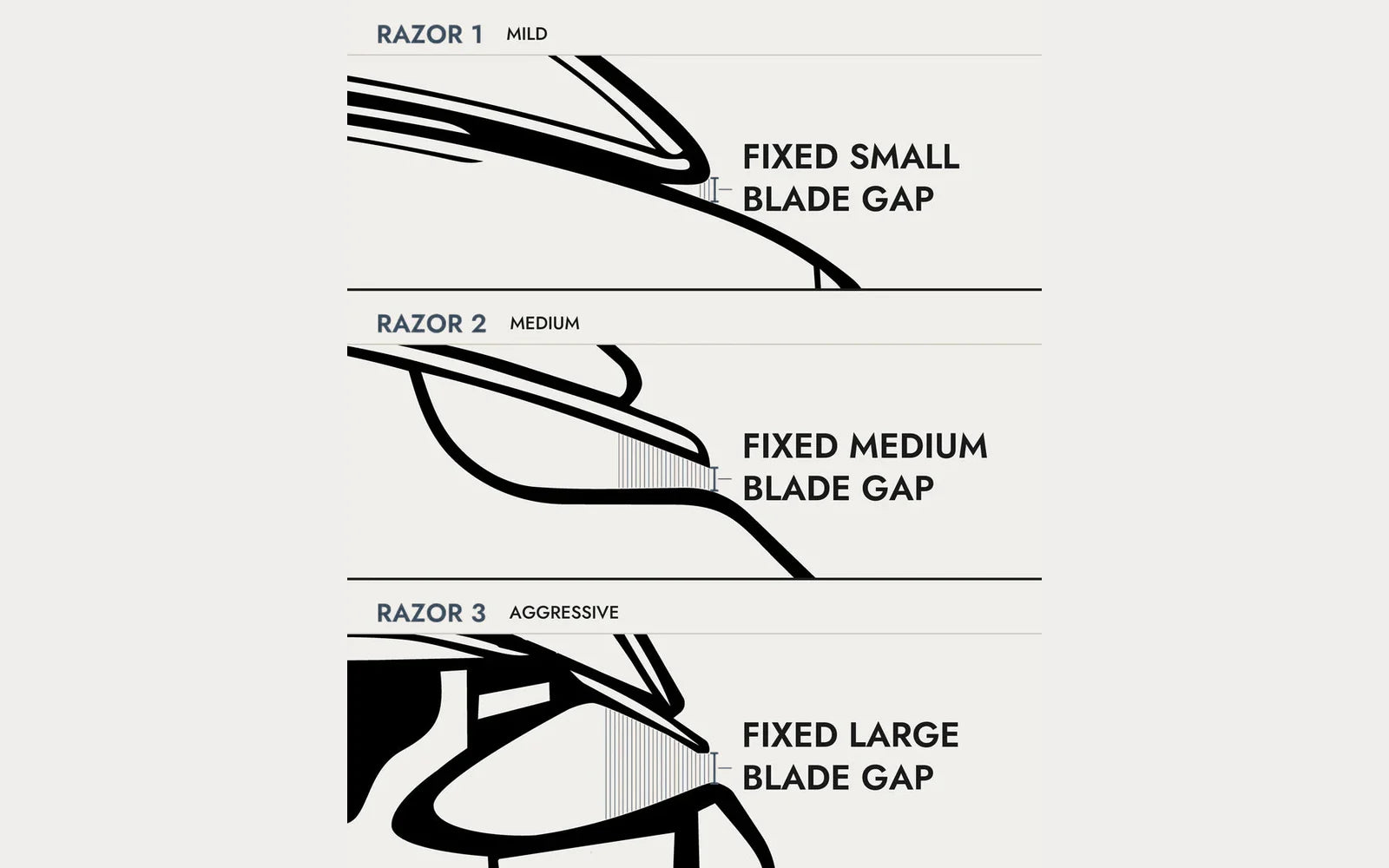
Fix: with an adjustable razor, you can change the blade gap, which sets how aggressive the shave is, to suit your skin and your stubble. Go to a lower setting where you get razor burn, so that area gets a mild shave.
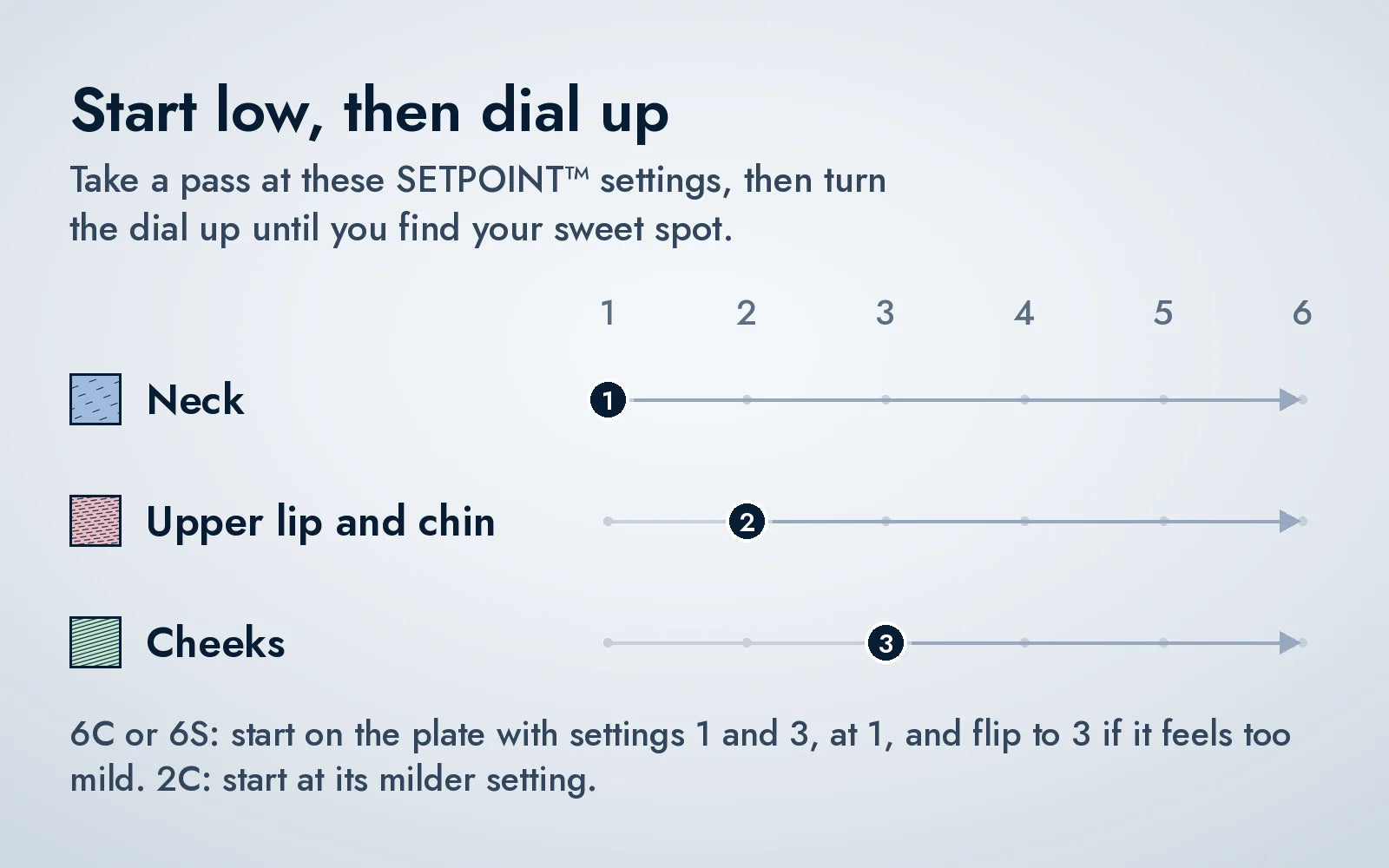
On the Rockwell Razors SETPOINT™ adjustable safety razor, you can change the setting on the go. Start low, take a pass and see how it feels. If you can go more aggressive, dial it up until you find your sweet spot. As a starting point, we suggest setting 1 for your neck, 2 for your upper lip and chin, and 3 for your cheeks, then adjust from there.
On a 6C or 6S, start with the plate that has settings 1 and 3. Shave at 1. If that feels too mild, flip the plate to 3. That tells you whether 1 is mild and 3 is aggressive for you, or whether the 2-4 plate gives you a better pass.
Creators who tested SETPOINT™ found the same thing. Long Island Shaving got weepers on setting 6 and found setting 3 comfortable ("Rockwell SETPOINT™ First Shave", Oct 2, 2026, at 26:44), and Heiko Shaves also finished on 3.
5. The blade doesn't suit you, or it's done
Most safety razors take standard double-edge blades, but those blades vary in sharpness from brand to brand. A blade that's perfect for one man can tug and sting for another, and every blade goes dull after a few shaves.
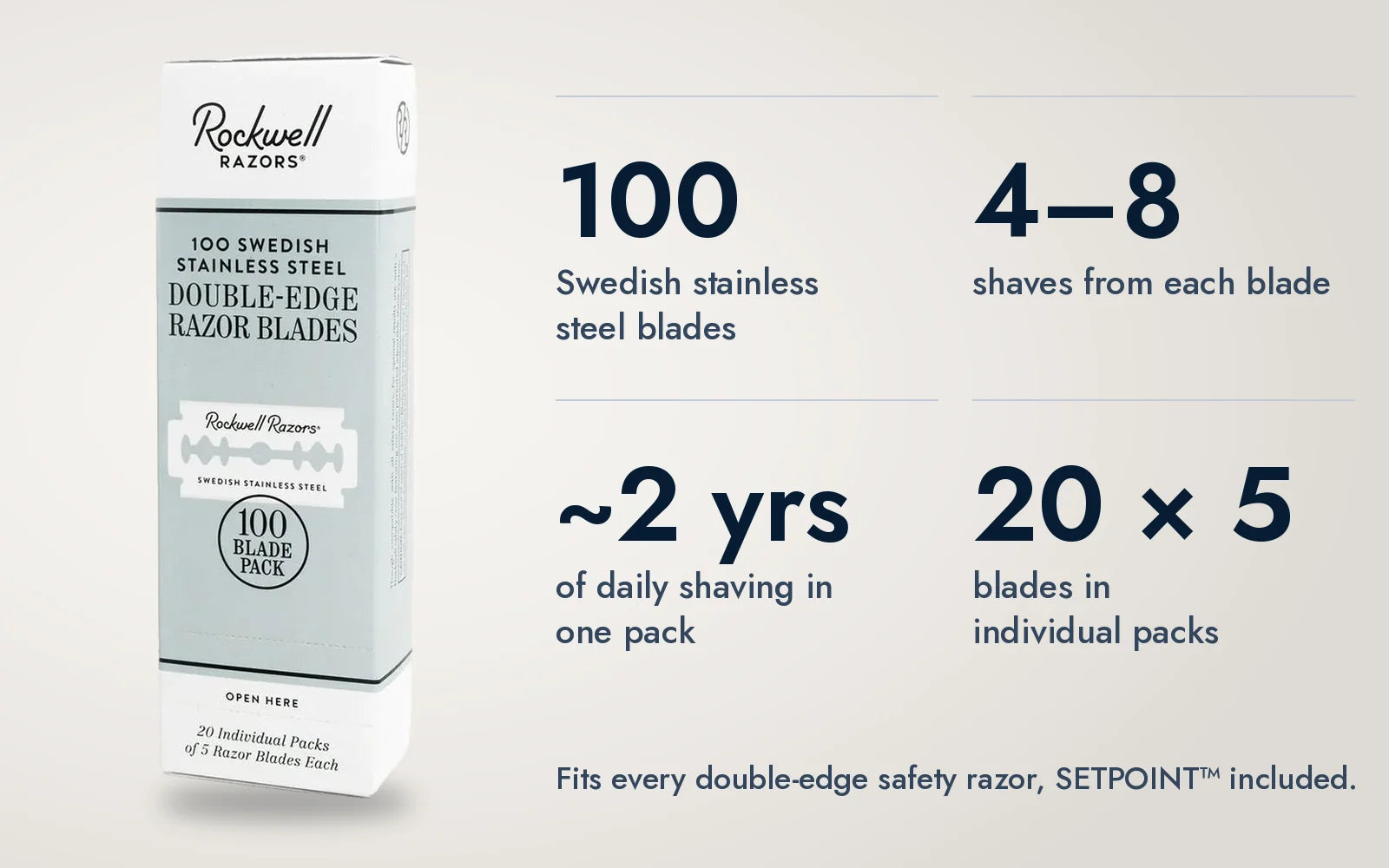
Fix: change the blade at the first sign of pulling. Give a brand at least a few shaves before you judge it. If you still don't get a good shave after changing blades, switch brands. A 100-pack of Rockwell blades is an economical way to always shave with a fresh edge, at about 18 cents a blade.
6. Your prep is thin
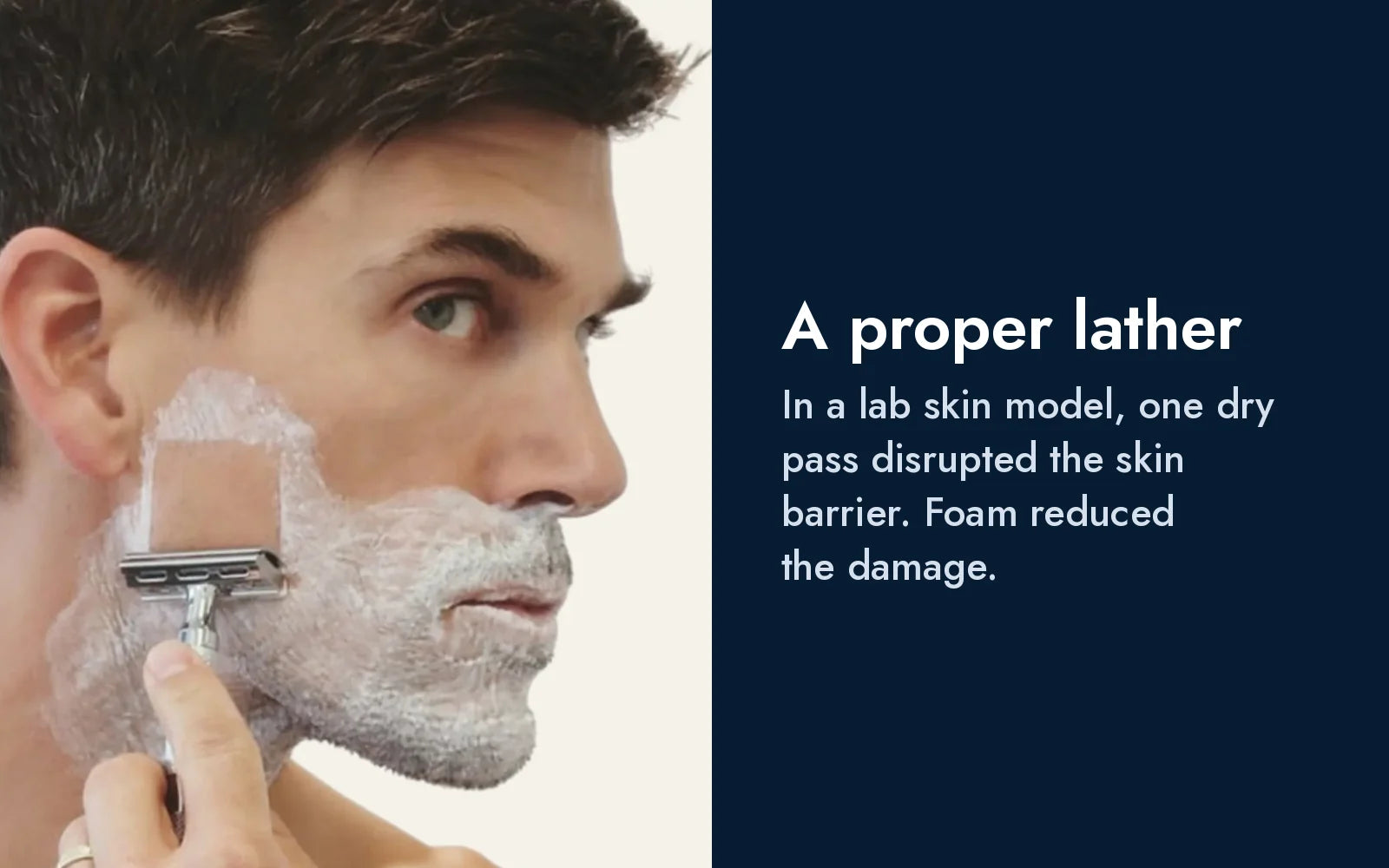
Cartridge gel from a can is forgiving. A safety razor needs a proper lather. In a lab skin model, a single dry pass disrupted the skin barrier, and foam reduced the damage (Turner et al., 2007; Costello et al., 2023).
Fix: shave after a warm shower. Build a slick, wet lather and re-lather before every pass.
7. Something you're putting on afterwards
New wet shavers often add new products at the same time: a new cream, a new soap, an alcohol-based aftershave. Any one of them can sting freshly shaved skin and look like razor burn.
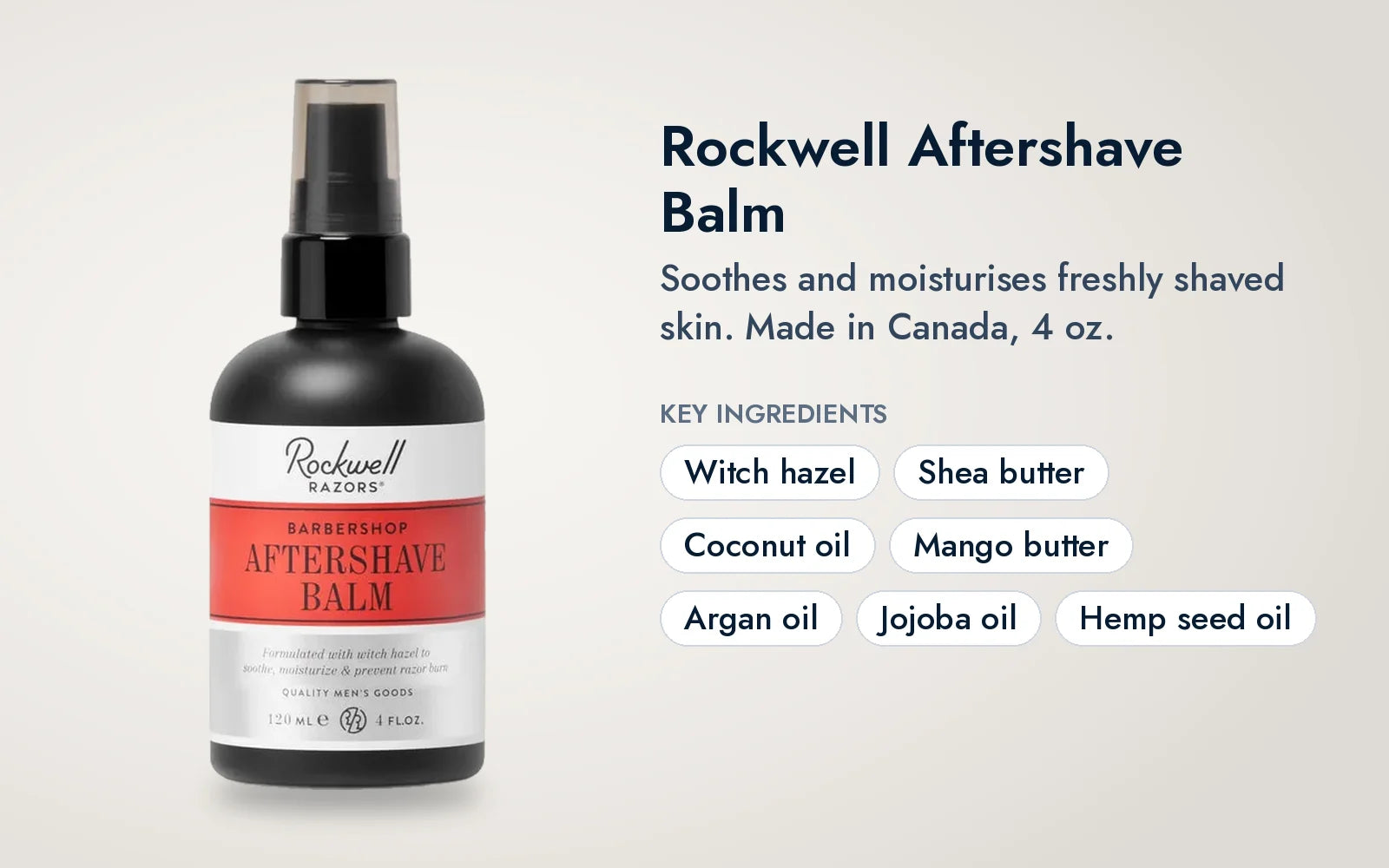
Fix: for a week, strip back to cool water and a soothing aftershave balm, like the Rockwell Aftershave Balm. Add other products back one at a time, so you can tell which one stings.
Find your cause in 30 seconds
|
What you notice |
Most likely cause |
First thing to change |
|---|---|---|
|
Burn everywhere, straight after shaving |
Pressure |
Hold the handle at the end; use no pressure |
|
Burn only on the neck |
Setting too aggressive for the neck |
Go lower on the neck and use light pressure (neck guide) |
|
Patchy stubble, so you go back over it |
Angle too flat, or setting too mild for your growth |
Find your angle; raise the setting on the cheeks |
|
Small nicks along with the burn |
Angle too steep, or setting too high |
Flatten the angle; drop one setting |
|
Fine on a new blade, burns by shave three or four |
Blade dulling quickly for your beard |
Change blades sooner, or try another brand |
|
Stings only once the aftershave goes on |
Product |
Finish with a soothing aftershave balm, like the Rockwell Aftershave Balm |
|
Bumps a day or two later |
Ingrown hairs |
Shave with the grain; don't stretch the skin (bumps guide) |
Change one thing at a time
It's tempting to change your blade, soap, setting and technique all on the same morning. Don't. If the burn stops, you won't know why, and if it gets worse, you won't know what caused it. Change one variable, give it three or four shaves, then move on.
A sensible order is: pressure, then angle, then setting, then blade, then products.
When the razor really is the problem
Sometimes technique isn't the issue. If you've fixed your pressure and angle and you still burn on one part of your face, or still need extra passes to get the stubble, your razor's gap is probably wrong for that area. With a fixed razor, the only way to change that is to buy a different razor.
An adjustable razor lets you change it. SETPOINT™'s dial sets the gap from 0.30 mm (setting 1) to 1.10 mm (setting 6), and it turns mid-shave, so your neck and cheeks each get their own setting. If you're not sure which Rockwell fits you, see which Rockwell is right for you or the best razor for sensitive skin. Rockwell has 10,000+ 5-star reviews, and every Rockwell comes with 100-day free returns, no questions asked.
If the irritation hasn't settled after a week without shaving, or bumps and dark marks keep coming back, see a dermatologist. This article is general information, not medical advice.